Why Social Media Should be Integrated as a Topic in Uganda’s Secondary School Curriculum
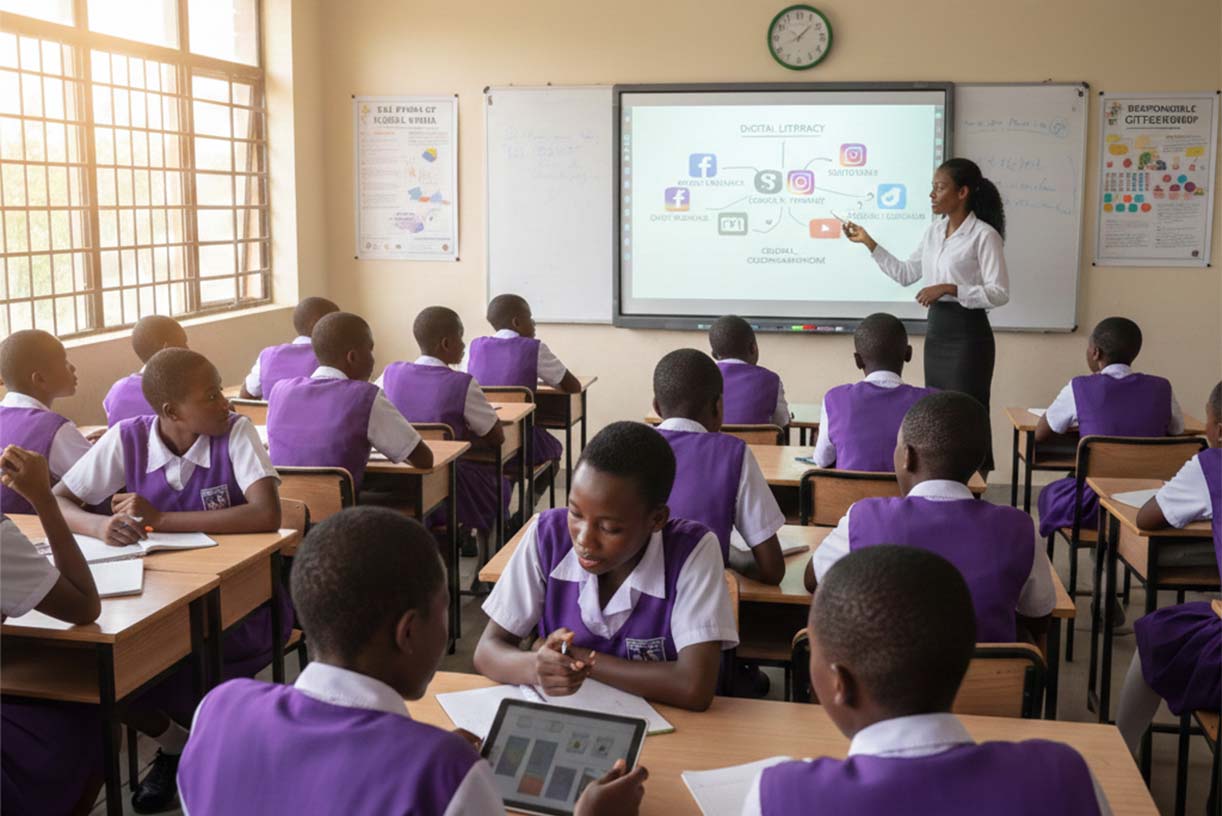
In the past, there was an evening fire that could be characterised with stories from grandparents, but now this competes with the silent glow of smartphone screens. This is the new reality: a generation of young adults, aged 18 to 30 and above, whose worldviews are increasingly shaped not by communal wisdom, but by the relentless scroll of social media feeds. At Gateway Research Centre, we observe this digital shift not with alarmist condemnation, but with a proactive conviction. Social media, like the advent of artificial intelligence, is an irreversible force of our time. The major question for Uganda is no longer if our youth are online, but how we can equip them to navigate this space wisely. Therefore, Gateway Research Centre advocates for the formal integration of social media literacy into Uganda’s secondary school curriculum, transforming it from a tool of potential harm into a launchpad for opportunity.
The negative consequences of an unguided digital journey are easily visible. Our social media platforms and even mainstream media, such as television, are rife with political and social disinformation and misinformation, making young people direct consumers of online propaganda. They engage in political discourses based on fabricated content, threatening the very fabric of informed citizenship. Simultaneously, the floodgates are open to explicit adult content and pornography, easily accessible by school-going children. The traditional safeguards are failing; the simple date-of-birth check on social media platforms is a hollow formality, easily modified by any tech-savvy child.
For example, let’s consider the rich traditions of the Baganda (of the Buganda Kingdom in Central Uganda). The cherished practice of ‘Okukyalira ensiko’ (labia elongation), once a private, culturally significant rite of passage guided by a trusted Ssenga (auntie), is now being replaced by the counsel of pseudo-experts and unverified content online. The virtual “aunties” and “uncles” on YouTube, Facebook, WhatsApp, Instagram and other platforms share graphic and often misleading information without disclaimers, eroding the respect for culturally embedded guidance. The phone has become the new, all-knowing elder, and children, armed with this device, often know more or believe they do compared to their parents, creating a dangerous disconnect from their heritage. Are you aware that there are now premium subscription WhatsApp groups for sharing nudes and other adult content?
However, to focus solely on the dangers is to miss the immense potential. Social media is a double-edged sword, and the educational system must teach our youth how to wield it productively. Imagine a 14-year-old in Kampala using YouTube not for mindless entertainment, but to follow tutorials on mathematics, baking, plumbing, food processing, or agricultural best practices for their family’s income generation. Envision a student in Gulu connecting with a global pen-pal on Facebook to practice German, French, Spanish, Arabic, or learn about other cultures. These platforms are vast repositories of educational content, skill-building resources, and harmless leisure that can foster creativity and global connection. Young people can generate peace and find inspiration, accessing a world of knowledge previously confined to library shelves.
The gist of our advocacy is this: we cannot reverse the tide, so we must teach our children to swim. A structured curriculum topic on social media would provide this essential training. It would empower students to discern credible information from propaganda, understand the algorithms that shape their feeds, and recognise the signs of addiction and the mental health impacts of excessive screen time. It would resurrect, in a modern context, the role of the guide, replacing the virtual pseudo-Ssenga with a teacher who can demystify the digital world.
Just as we teach our children to cross a road safely, we must now teach them to navigate the information superhighway. By integrating social media studies into our schools, we are not endorsing its excesses; we are arming a generation with the discernment to harness its power for growth, connection, and positive advancement, while safeguarding their minds and our rich cultural values. The future of Uganda’s socio-cultural and digital landscape depends on this crucial intervention
Technology
Why Social Media Should be Integrated as a Topic in Uganda’s Secondary School Curriculum
Nannozi Susanie Ggoobi
November 20, 2025
879 views
Author:
Nannozi Susanie Ggoobi
Newspaper:
Gateway Research Centre
Published:
November 20, 2025
Category:
Technology
Tags:
Uganda Communications Commission
Ministry of Education & Sports
Uganda
Summary
In the past, there was an evening fire that could be characterised with stories from grandparents, but now this competes with the silent glow of smartphone screens. This is the new reality: a generation of young adults, aged 18 to 30 and above, whose worldviews are increasingly shaped not by communal wisdom, but by the relentless scroll of social media feeds. At Gateway Research Centre, we observe this digital shift not with alarmist condemnation, but with a proactive conviction....
Related Articles
More articles in the same category

Technology
Government Advised to Prioritise Digitisation of the Economy
New Vision newspaper
Jan 15, 2022